In brief
Most B2B discounting strategy is built around control: caps, approval processes, sign-off chains, which treats the symptom and ignores the cause. A discount request is usually the last visible sign of something that went wrong earlier in the deal, or of a rep who lost their nerve when naming the price, and with a 1% price increase lifting operating profit by 8.7% (McKinsey, 2026), each one is expensive. A discount is only right when it is a trade, a give for a get. Sales leaders should treat every other one as a defect report: when it came up, with which rep, in which segment, and what the customer was really asking for.
One of the first deals I ever closed was quoted at £8,000 a year. I gave away £3,000 of it, and the customer barely had to ask.
It was my first proper sales job, I wasn't earning much, and £8,000 sounded like an enormous amount of money. So the moment I said the number out loud I went on the defensive and started justifying it, while the customer said close to nothing. By the time I stopped, I had talked myself into a discount of more than a third.
My manager walked me through it afterwards. The customer had not negotiated. I had negotiated against myself, and I still think about that conversation whenever I name a price and feel that flash of imposter syndrome.
The discount was never about the price.
A 5% discount means selling a fifth more just to stand still
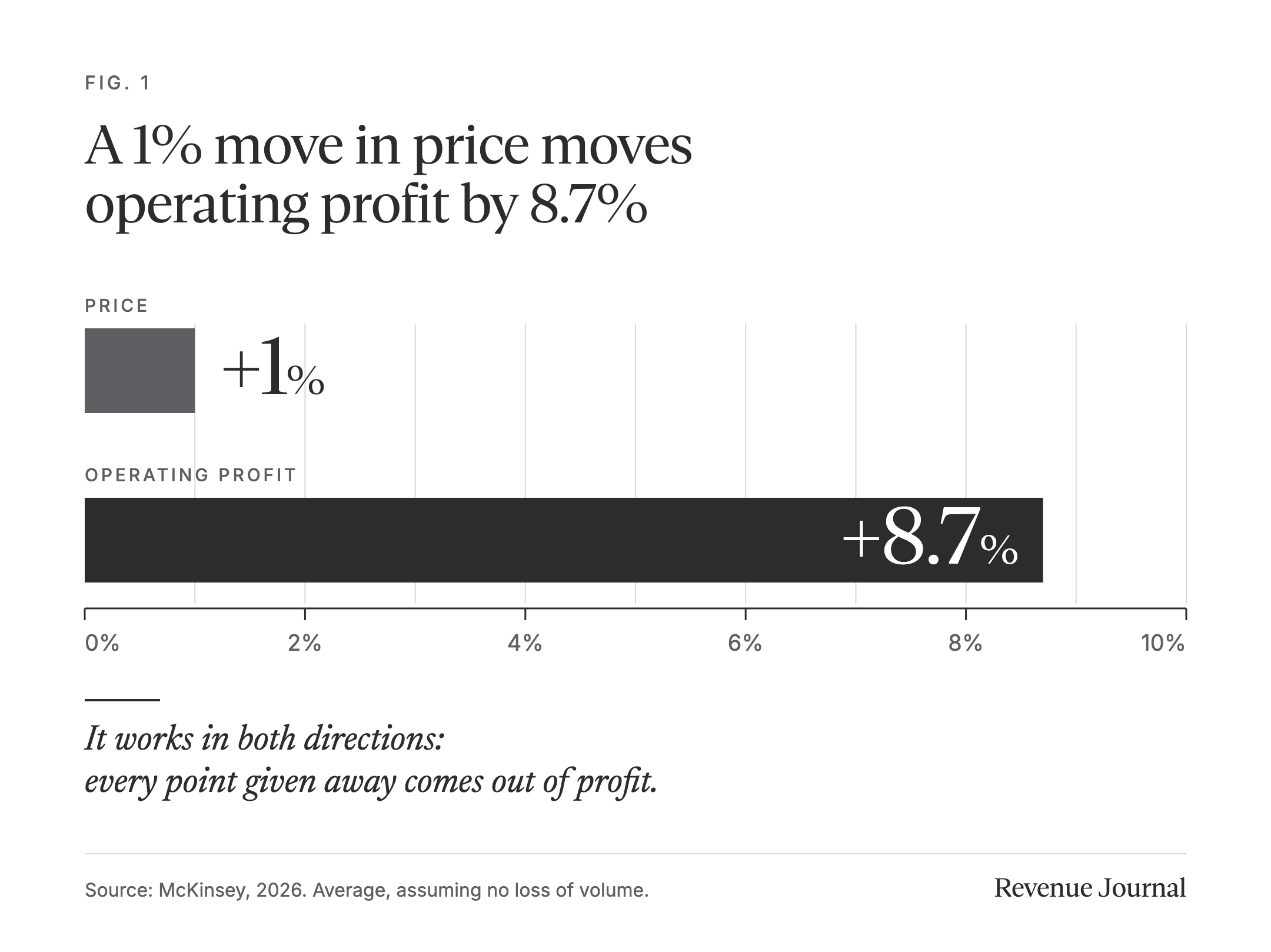
On average, a 1% price increase lifts operating profit by 8.7%, assuming you lose no volume (McKinsey, 2026). The same lever works in reverse, so every point a rep gives away comes straight out of profit.
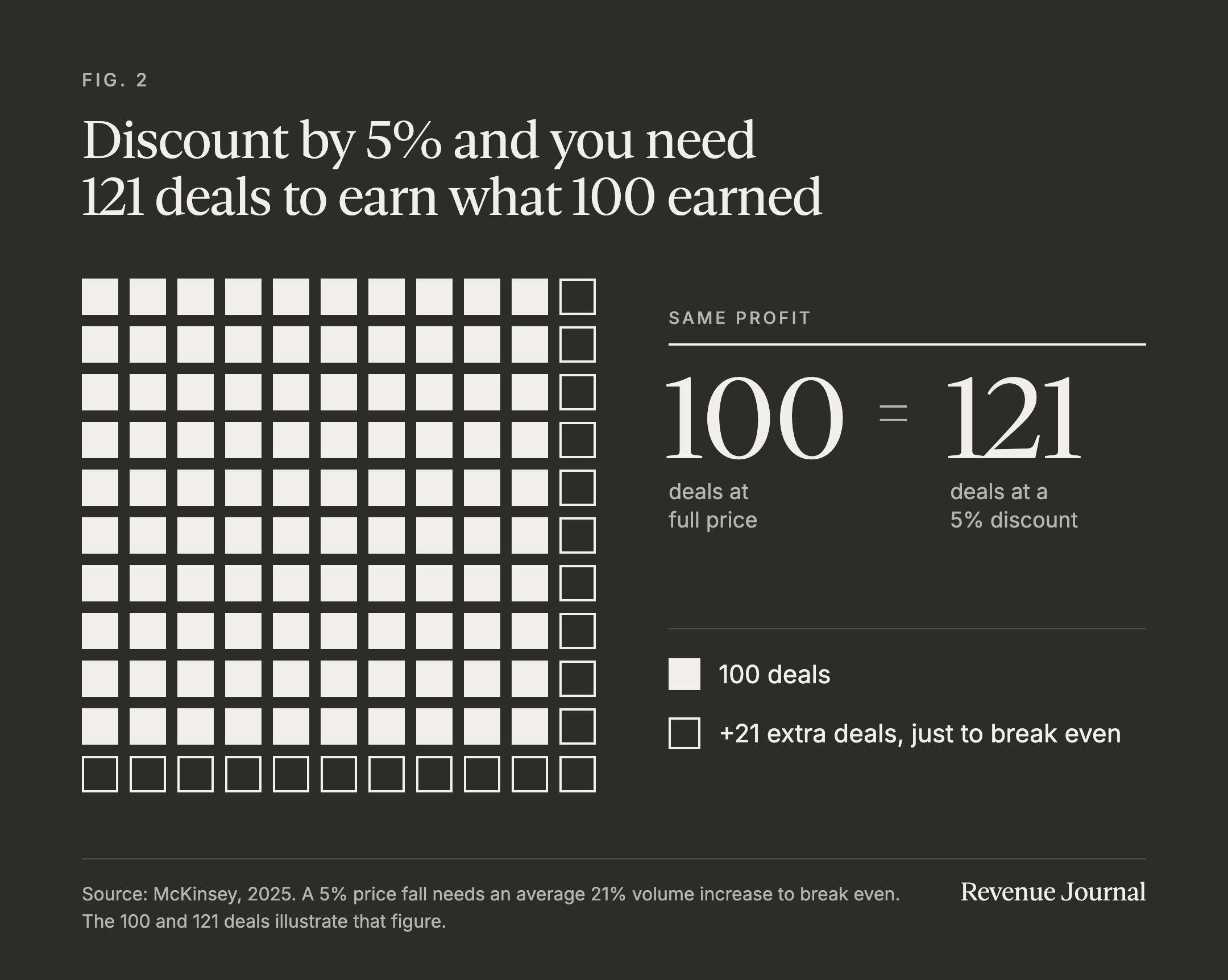
A 5% price cut requires, on average, a 21% increase in volume just to break even (McKinsey, 2025). The figures use different samples but point the same way. If your team closes 100 deals a year and the average discount is 5%, you need 121 deals to make the same profit. That is the sum to do before anyone agrees to "just 5%".
Discount discipline polices the symptom
Caps and sign-offs decide whether a discount gets through, and tell you nothing about why it was asked for. By the time a customer asks for money off, the cause is usually weeks old: the value was never tied to a number, or the person you are selling to cannot make the case internally. Or the rep flinched.
Buyers are pushing harder on price: Gong Labs found pricing conversations had grown 62% longer between 2020 and early 2023. It also warns that discounts often extend deal duration and can sometimes signal that the customer is not an ideal fit (Gong Labs, 2025). Chris Voss calls those customers HALF: hard, annoying, lame, frustrating, and his team found they took two to five times as long to generate the same revenue.
Sometimes the customer never asked
Start with the rep, because anyone in sales leadership will have started there. The price felt huge to me, so I assumed it felt huge to the customer. The discount was for my comfort, not their budget. It is the same people-pleasing instinct that keeps account managers servicing accounts instead of growing them.
It's a lot like sport at a high level. A racing driver on the best lap of their life, a few corners from a track best, realises what is at stake, and that is when they lose their nerve, play it safe, or worse, choke and spin out. A rep reaches the final stages of a deal because they were confident they could solve the customer's problem at a fair price. The last few corners are the wrong place to lose that confidence, just because the customer has challenged it.
Nerves only explain part of it. Reps get criticised for losing a deal far more often than for pricing one too cheaply, as Bain's pricing team has observed, so they learn to give ground on price until the deal closes (Bain, 2018). We train the flinch, then act surprised by it.
When the customer does ask, they are telling you something
Whenever I took a discount request to my managers, they wanted to know two things. Did I understand why the customer was asking? And what other routes had I explored?
Neither question is about the size of the discount. A request for money off is rarely the whole message, and the reflexive discount is the wrong response, at renewal as much as on a new deal. Most price objection handling goes wrong because the rep answers the number, not the message.
John McMahon told Daniel Wikberg that the most common mistake reps make is to mix up a coach with a champion. A contact who likes you but cannot fight for you internally has one argument left, and it is a lower price.
Not every request is about the deal. Procurement asks every time because asking is the job, and a padded list price invites the question. Those requests tell you about your pricing.
The easiest discount to get is the one nobody calls a discount
Scope creep is the silent discount: the price stays the same while the work grows. PMI found that 52% of projects experienced scope creep or uncontrolled changes to scope, up from 43% five years earlier (PMI, 2018). It is a project figure, but unpriced work hits margin exactly as a discount would.
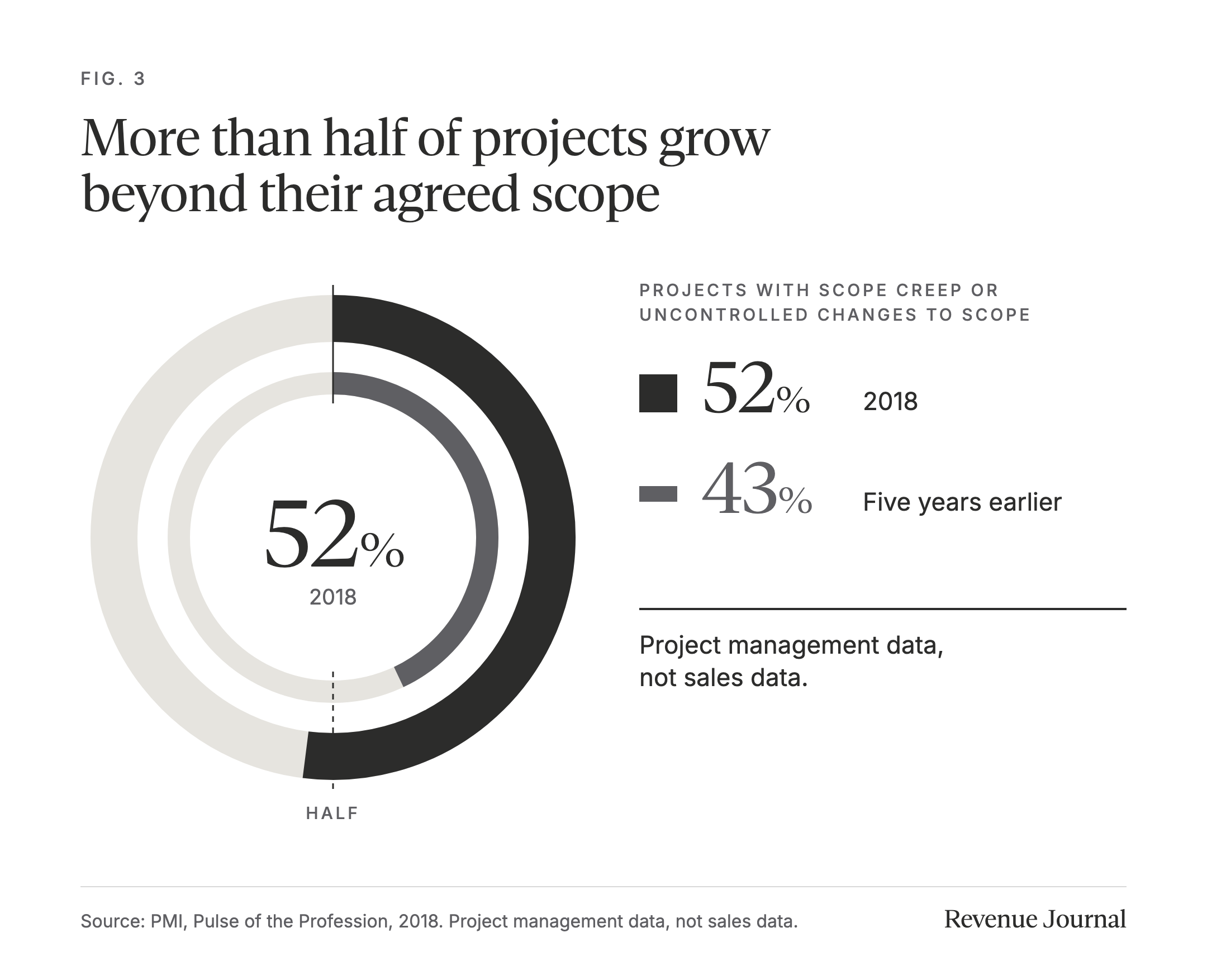
This type of discount typically shows up in the KPIs of implementation and delivery teams, and from there it can trickle down into decisions about product delivery that affect every customer, caused by a small number who are taking the piss. If your discount reporting only counts the percentage off list price, it is measuring the discounts your customers bothered to ask for.
Escalation buys the rep time. It can also hand the manager the blame.
Approval processes get a bad name as bureaucracy. That was not my experience. Saying "let me discuss this with my management" bought me time to work out what the customer was asking for, and what a fair response would be. Often the conversation with management never needed to happen.
I have also sat on the other side of that conversation, with reps on my team asking me for a discount, and it is very hard to say no. You are relying on the rep's account of the deal and the customer, and drawing a hard line may cost you the quarter.
Consciously or not, the rep is passing on a share of the responsibility: if I approve and the deal closes it is their win, but if I refuse and the deal is lost, part of that loss is now mine.
That is why I asked those same two questions of my own reps. They hand the deal back to the person who owns it.
When is a discount right? When you get something back.
A discount is right when there is a quid pro quo: a give for a get.
I have asked customers to sign before the end of a quarter, and offered an extra free month or some additional product in return. Quarter end means far less to the buyer than to the seller, so if I am asking them to put my timetable first, they should get something for it. Anyone who has carried a number at a public company knows why you ask: quarterly earnings take on biblical levels of importance.
Doesn't that teach customers to wait for the last week of the quarter? It can. Ideally you have done the work to get the deal done on its own timeline, and the trade is for when the two timelines do not line up. It should also likely be reserved for selling a licence or some other recurring purchase. On short-cycle, transactional sales it's going to train the wrong behaviour.
Treat every discount as a defect report
Most companies book discounts as a cost of sale. I would treat them as a defect in the sales process: something to be measured and understood, not just approved. A factory that reworked every faulty part without asking which machine produced it would not stay in business for long. Approving discounts one at a time is the same mistake.
Give reps questions to ask in the moment, like the ones above, and permission to pause. Then log every discount request, granted or not, with five things:
My £3,000 would have gone in that log with one word in the last row: nothing.
Frequently asked questions
How much does discounting really cost a B2B company?
On average, a 1% price increase lifts operating profit by 8.7%, and the effect runs the same way in reverse (McKinsey, 2026). A 5% price cut needs an average 21% increase in volume just to break even (McKinsey, 2025). A team closing 100 deals a year at a 5% average discount needs 121 deals to make the same profit.
Why do sales reps offer discounts so readily?
Two reasons. The first is nerves: a rep who thinks the price is high assumes the customer does too, and starts negotiating against themselves. The second is incentives. Reps get criticised for losing a deal far more often than for pricing one too cheaply, so they learn to give ground on price until the deal closes (Bain, 2018).
Do discount approval processes work?
They work as a pause, not as a filter. Telling a customer "let me discuss this with my management" gives a rep time to work out what is really being asked and what a fair response would be. The risk sits with the manager: a rep who asks for a discount is also passing on a share of the responsibility if the deal is lost. An approval process that only checks a percentage against a threshold says nothing about why the discount was requested.
What should a rep do when a customer asks for a discount?
Find out what the request is about before responding to the number. Ask what the price is being compared against, what the contact needs in order to make the case internally, and whether the concern is price or fit. Gong Labs warns that discounts often extend deal duration and can sometimes signal a poor-fit customer (Gong Labs, 2025). If a discount is still the right answer, make it a trade: ask for something in return, such as a signature by a set date.
Is scope creep a form of discounting?
Yes. When the work grows and the price does not, the customer has received a discount that never appeared on a quote or passed through approval. PMI found that 52% of projects experienced scope creep or uncontrolled changes to scope (PMI, 2018). It should be tracked alongside price discounts, in software as well as services.
About Revenue Journal
Revenue Journal is where B2B executives share first-hand growth strategies and hard-won insights. Published by Aira. www.aira.app/blog
Sources
- McKinsey & Company, "B2B pricing: Navigating the next phase of the AI revolution", 2026
- McKinsey & Company, "Growth amid uncertainty: Jump-starting B2B sales performance", 2025
- Gong Labs, "The best sales insights of 2024", 2025
- Bain & Company, "Is Pricing Killing Your Profits?", 2018
- Project Management Institute, Pulse of the Profession 2018, reported in PM Network, 2018