In brief:
Former FBI hostage negotiator Chris Voss sat down with Aira CEO Daniel Wikberg to discuss B2B negotiation tactics. Voss's research found that difficult clients take two to five times longer to generate the same revenue as straightforward ones — meaning most sales teams have agreed to a 50% pay cut before the contract is signed. This article covers three ideas that ran counter to how most sales teams are trained: stop trying to get people to say yes, walk away from bad-fit clients systematically, and listen before you pitch.
.webp)
In conversation with Chris Voss: why B2B sales teams pitch too much and listen too little
Most sales training is built around getting people to yes. Build momentum. Tie down micro-agreements. Keep the energy positive. Chris Voss spent decades in situations where the wrong word was fatal, and his conclusion is the opposite: getting people to say no is more powerful than getting them to say yes.
That is not the only thing he disagrees with conventional sales training on.
Chris Voss is the former lead FBI hostage negotiator, founder of the Black Swan Group, and author of Never Split the Difference (if you’re in sales and haven't read that, stop reading and go buy it). He sat down with Aira CEO Daniel Wikberg to talk through B2B negotiation tactics and where deals actually break down. Most of what he said runs counter to how sales teams have been trained.
Stop trying to get people to say yes
Sales teams are trained to stack yeses. The logic is that each agreement builds commitment. Voss inverts this, and the neuroscience behind his argument is hard to dismiss.
When you push someone toward yes, you create anxiety, not agreement. They start wondering what they have committed to. What invisible obligations have they taken on? The momentum you think you are building is resistance accumulating beneath the surface. If you’ve ever been approached in the street for a charitable donation, you will know the feeling of being lead down a road where disagreement gets increasingly difficult.
No makes people feel safe. When someone says no, they feel protected. When people feel safe, they listen.
"Is now a bad time to talk? Instead of: do you have a few minutes."
It sounds like a small thing. It is not. Reorienting your opening questions around no changes the dynamic of the entire conversation. The prospect is not looking for the exit. They are engaged.
That is the environment where real information moves.
Most B2B deal qualification happens too late
The core of everything Voss teaches is information flow. Who is withholding what, why, and how you get it out earlier.
In B2B sales, there is always something the other side has not told you. Voss calls these Black Swans. The hidden facts that would change everything if they were on the table. They are almost always there. They usually come out at the end, when the damage is done. Most salespeople never create the conditions to surface them early.
The reason is simple. Most salespeople are too busy pitching.
"You're always leaving money on the table and you're always creating friction with your counterpart by not taking any time to explore the deal space."
The tool Voss uses here is calibrated questions. 'What' uncovers problems. 'How' forces both parties to think about implementation. Used in sequence, they make the other person tell you what actually matters to them. A pitch cannot do that.
Most reps ask questions they already know the answer to. They are waiting to hear the one response that lets them pivot to the solution. Voss calls this the gotcha listener. The person across the table notices. And they stop sharing. This was one of the first lessons i remember receiving in my first sales job. The rep at the time described this process of leading prospects to answers we already had as ‘laying landmines for them to walk over’. It’s perhaps ironic that he chose such a dangerous and frought analogy.
Bad-fit clients are costing you more than the deals you lose
A few years ago, Voss gave his sales team a brief: identify which customers qualified as HALF. Hard. Annoying. Lame. Frustrating. His instruction was simple. Stop doing business with them.
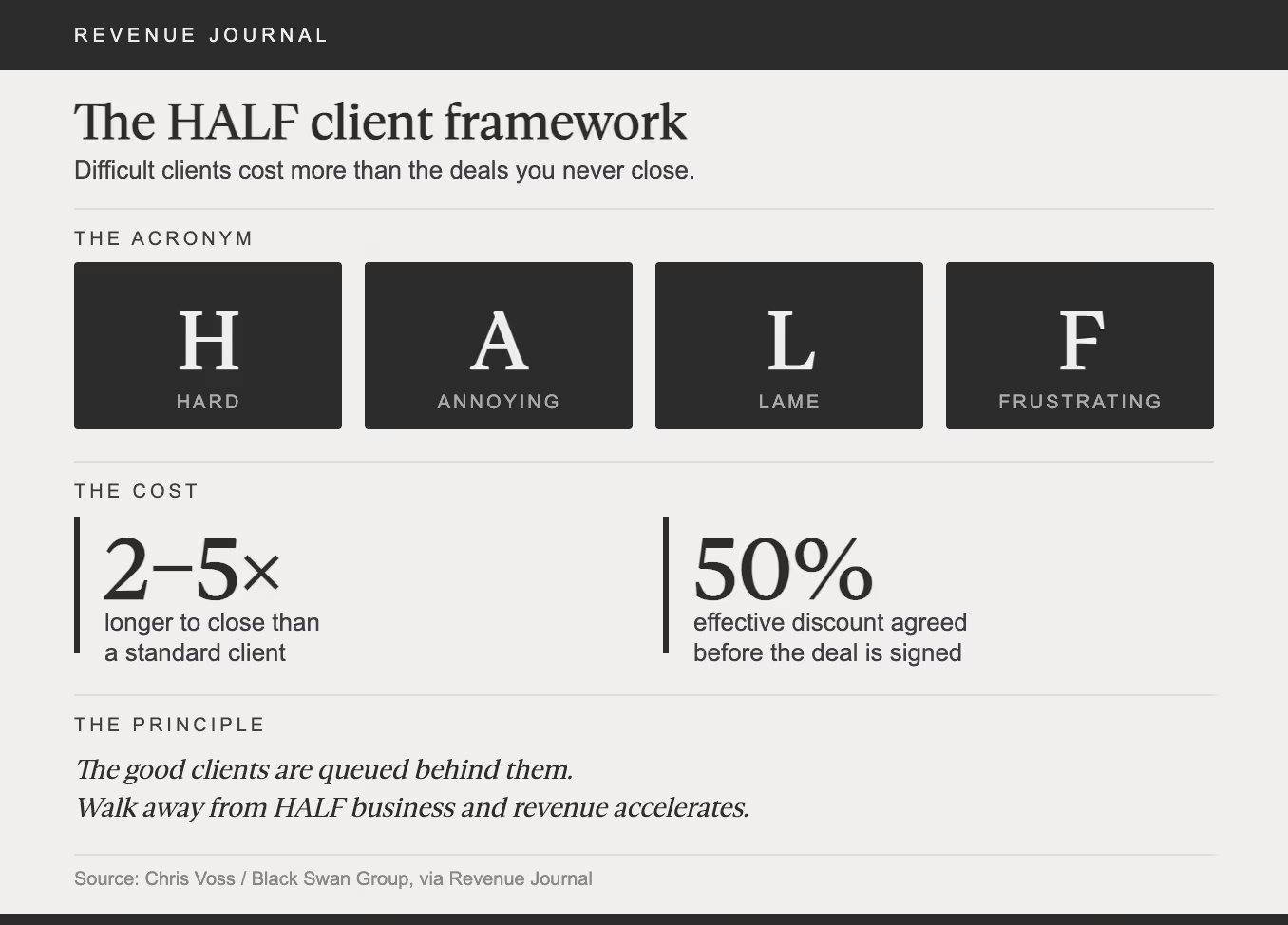
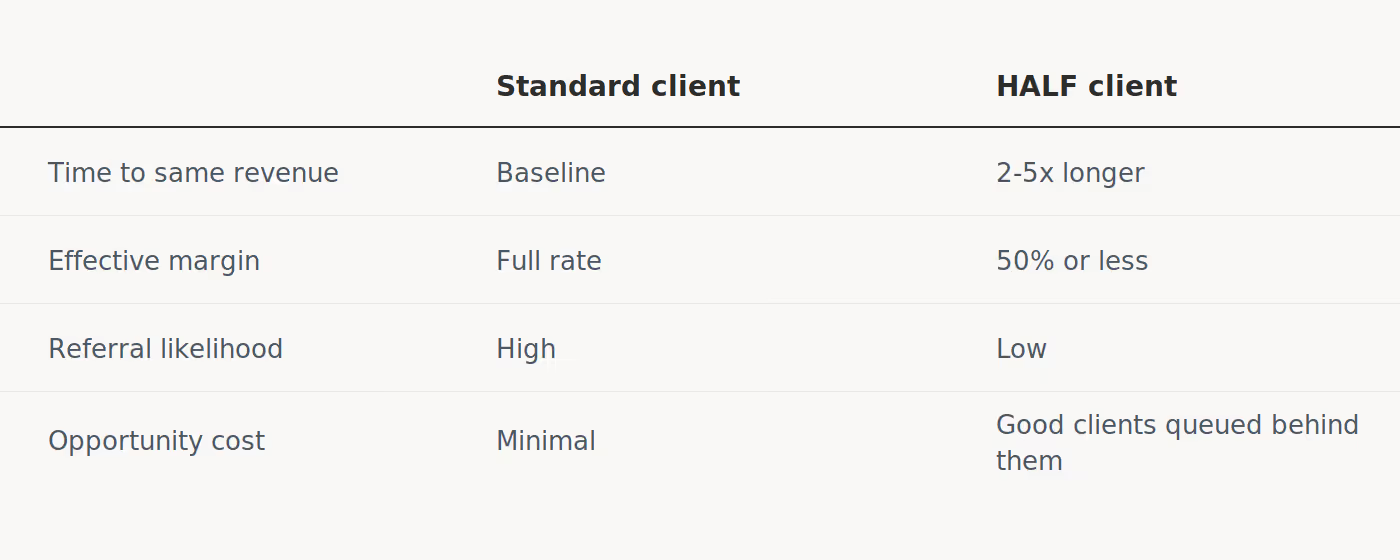
His team pushed back, as sales teams do when you tell them to walk away from money. But they started measuring. What they found was that HALF clients took two to five times as long to generate the same revenue as straightforward ones.
"The client who's always problematic — you're agreeing to a fifty percent discount right off the bat if it takes you twice as long to get the business."
The second finding was the one that changed behaviour. The good clients were queued up behind them. Every hour spent managing a difficult renewal, a complaint, or a renegotiation was an hour not spent with a client who was easy, profitable, and likely to refer others. When Voss's team stopped taking HALF business, overall revenue went up.
We see the same thing in the organisations we work with. The maths is obvious once you do it. The reason it does not change behaviour is that commission and quota structures make it almost impossible for an individual rep to walk away from a deal on principle. That decision has to be made at the process level, not left to the person whose quarterly number depends on it.
The pipeline qualification criteria either account for client quality and long-term margin, or they do not. And most, frankly, do not.
Manufactured urgency costs more than it generates
December is when this comes up most. Quota pressure, year-end pushes, the temptation to manufacture a reason for the client to move now. Voss is direct about what this costs.
"If I'm trying to create urgency in you, it's a little bit more focused on me. I'm becoming much more transactional, much more selfish."
His alternative: be transparent about your own constraints and use them to move the deal forward. If you have a real deadline, say so. Frame it as a condition rather than pressure. Give the other side the option to say it will not work for them.
Genuine deadlines, stated plainly, move deals faster than manufactured ones. Because you have shown the other person that you tell the truth about your position. That is what makes long-term business possible. In some cases, communicating your own deadlines, such as ‘it would really help me if this closed before the end of the month, but only if it works for both parties’ can in fact build trust, but only if couched in the right way.
The reps who listen first are winning deals the others don't know they've lost
At the end of the conversation, Daniel asked Voss for one takeaway:
"Take the time to make sure people feel heard. It will accelerate the deal."
Everything else follows from this. The no-based questions, the calibrated what and how, the patience to let Black Swans surface, the discipline to walk away from HALF clients. None of it works if the other person does not trust that you are listening.
Most salespeople lead with product. The rep who leads with genuine curiosity wins deals before the pitch starts.
We covered how small sales teams are building this kind of advantage in our piece on how small sales teams are using AI to outrun enterprise competitors. The B2B negotiation tactics Voss describes and the operational advantage AI creates work together. But the relational has to come first.
Frequently Asked Questions
What is tactical empathy in B2B sales?
Tactical empathy, as defined by Chris Voss, is the use of emotional intelligence to make the other person feel genuinely heard. In B2B sales, it means acknowledging the other side's perspective before attempting to move them. People become more collaborative and less defensive about price or terms when they feel heard. Voss's argument is that this is not soft skill territory. It is grounded in how the brain responds to feeling understood.
Why should B2B salespeople stop trying to get prospects to say yes?
Yes creates anxiety. Each agreement triggers concern about hidden commitments, building resistance beneath the surface. No makes people feel safe and in control, which makes them more open and more honest about their actual position. Reframing qualification questions around no gets real objections on the table faster and builds a more honest foundation for the deal.
How do you identify bad-fit clients before they cost you?
Voss's HALF framework (Hard, Annoying, Lame, Frustrating) is a starting point. Measure time-to-revenue for each client type. If a segment consistently takes twice as long to generate the same profit, you have agreed to a 50% discount before the contract is signed. Build qualification criteria that account for client quality and long-term margin. Make it a process-level decision, not one left to individual reps under commission pressure.
What are calibrated questions and how do they work in B2B deals?
Calibrated questions are open-ended queries built around what and how. What questions uncover problems and priorities. How questions explore implementation. Used in sequence, they create a conversation where the other side tells you what actually matters to them. That is information a pitch cannot generate. Voss warns against over-relying on why, which tends to create defensiveness rather than openness.
Is anchoring useful in B2B sales negotiations?
Voss argues against extreme price anchoring. Highball or lowball opening positions drive deals off the table, damage long-term relationships, and risk backfiring if your anchor is lower than market. His alternative is emotional anchoring: preparing the other side for your actual ask by framing it as significant before you deliver it. The effect is that the real number tends to land as a relief rather than a shock.