In brief:
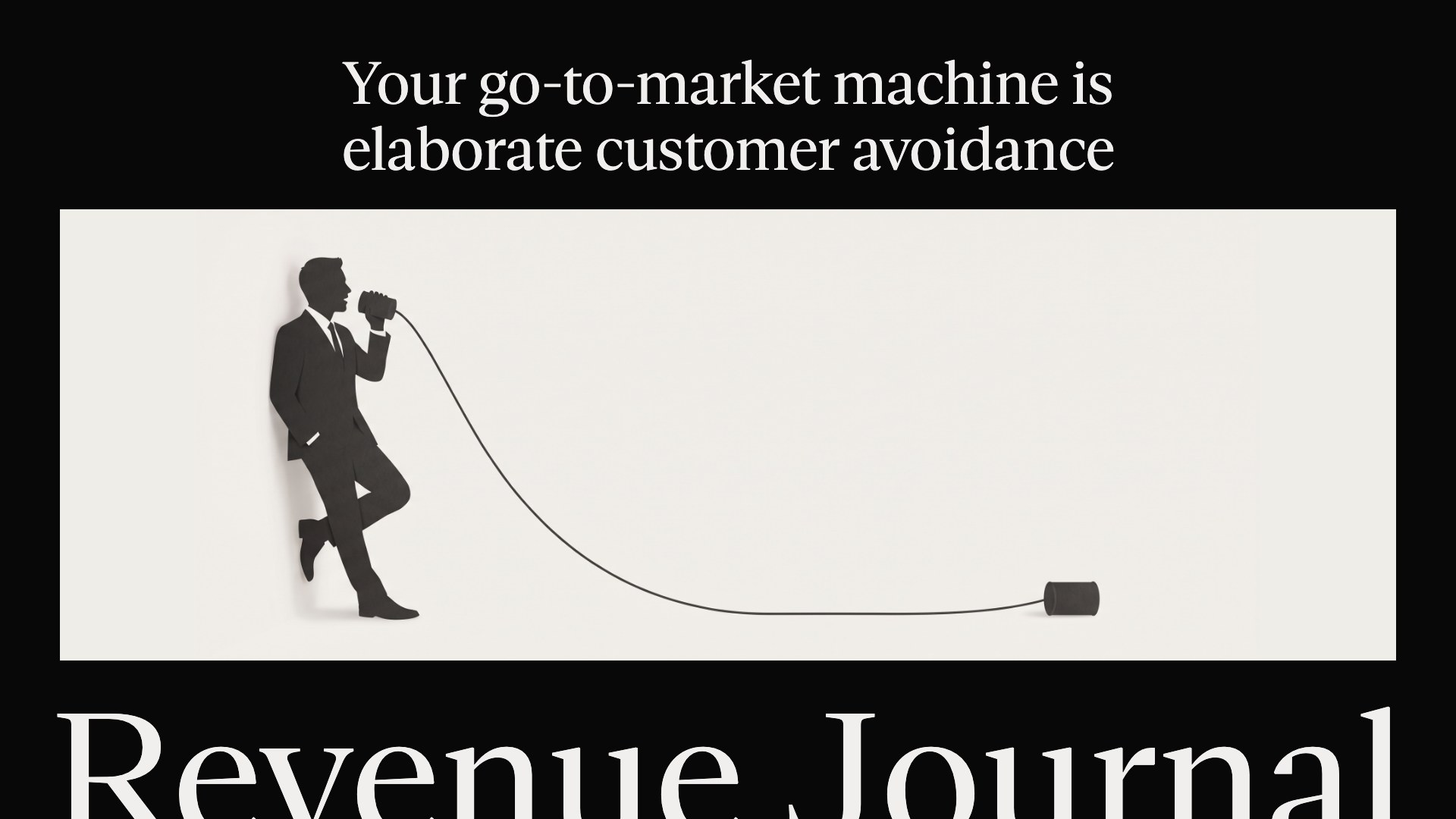
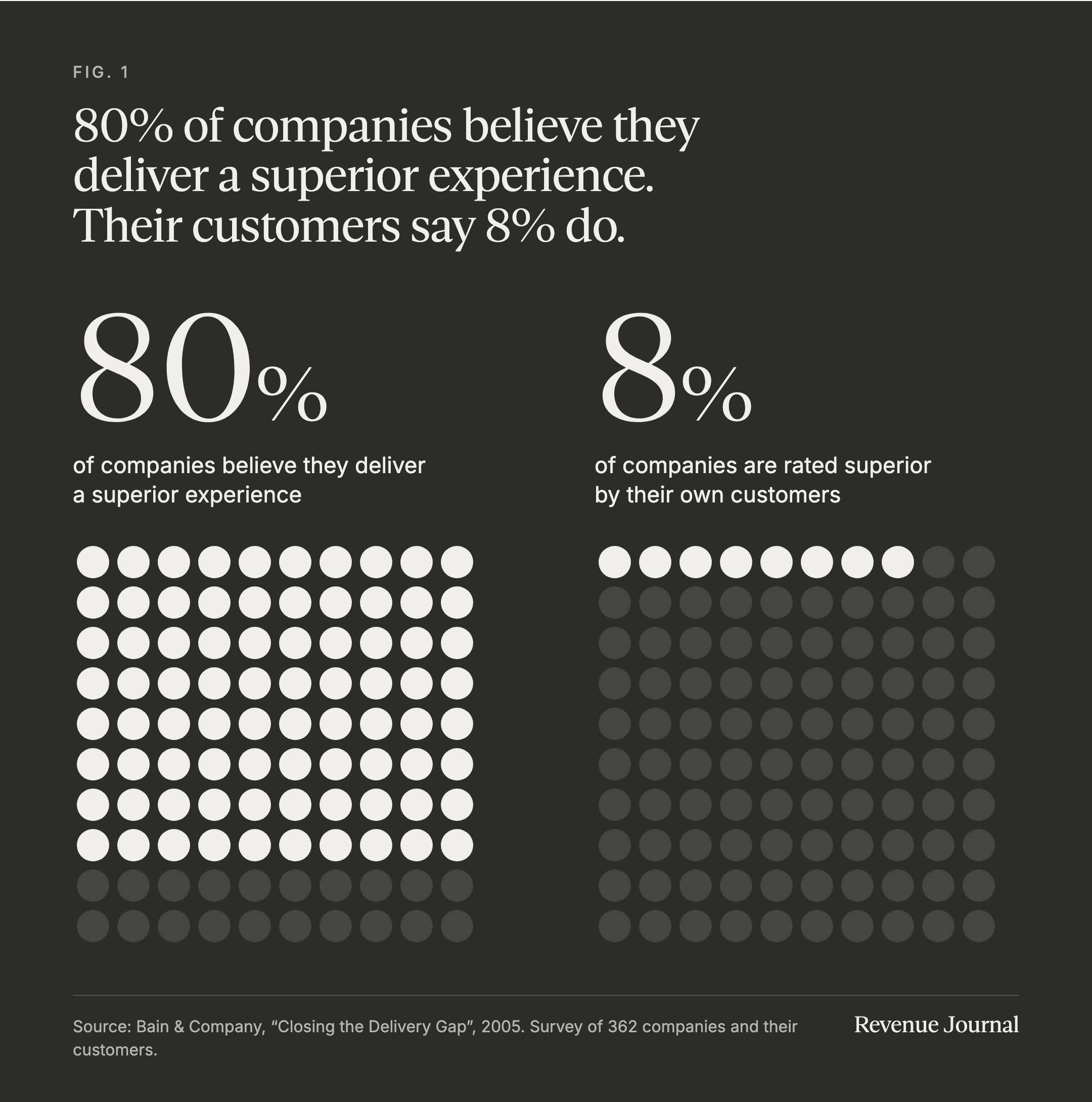
The cheapest tool in B2B sales is talking to customers, and most teams have quietly stopped. They pour money into inbound funnels, LinkedIn activity and dashboards because those feel like strategy and spare them the uncomfortable conversations. The numbers are revealing: 80% of companies think they deliver a superior experience while only 8% of their customers agree (Bain). The needle-mover is almost always boring, direct and free. You just have to ask, then act on what you hear.
Years ago, early in my sales career, a chief customer officer told me a story I have repeated ever since. At a large brewer that ran hundreds of pubs, sales were sliding and nobody could put their finger on why. A big-name consultancy took a large fee and delivered the obvious answer. The pubs looked tired and could not compete with smarter rivals on worn fittings. So the company spent millions on new interiors, new artwork, retrained staff and digital ordering at the table. Sales did not move.
Then someone tried something cheaper. They surveyed customers as they came in, with a free drink on the next visit as the incentive. The strongest signal was frustratingly simple. The regulars, the people who came back week after week, valued two things above all else: hot chips and cold beer. The company audited every fryer, fridge and cooling line in the estate, replaced anything more than two years old, and the sales figures began to move.
That pub chain made one of the most expensive mistakes in business. It decided what its customers wanted instead of asking them. B2B revenue teams do the same thing every day, with better dashboards and worse odds.
Most companies don't know what their customers value
Start with what leadership believes. Across 362 companies, 80% were sure they delivered a superior experience. Their customers put the figure at 8% (Bain). The same research found only 30% of firms run an effective customer feedback programme. Most companies are confident they understand their customers, and most are wrong, because they never built a reliable way to ask.
The pattern is not unique to pubs. Four academics spent seven years studying 72 companies, with thousands more firms and customers alongside, and found it everywhere. Companies routinely misidentify what actually drives customer value, not for lack of data, but because leaders build strategy on intuition, recent events and competitors' moves instead of evidence (Mittal et al., HBR, 2026).
That is the brewery, at industrial scale. The consultants were sure it was the decor. The drinkers said chips and beer. The gap between what leadership assumes and what customers actually value is not a rounding error. It is the whole game.
Sophisticated activity is usually avoidance
Here is the pattern underneath all of it. The most impressive-looking go-to-market work is often an elaborate way to avoid the simplest, slightly uncomfortable act in sales. Talking to a customer directly and hearing something you did not want to hear.
The brewery renovation was not laziness. It was the opposite. It was expensive, visible, strategic-looking effort. It just pointed in the wrong direction, because it was built on an assumption nobody tested against an actual customer. The survey cost a few free pints and produced the answer the millions could not buy.
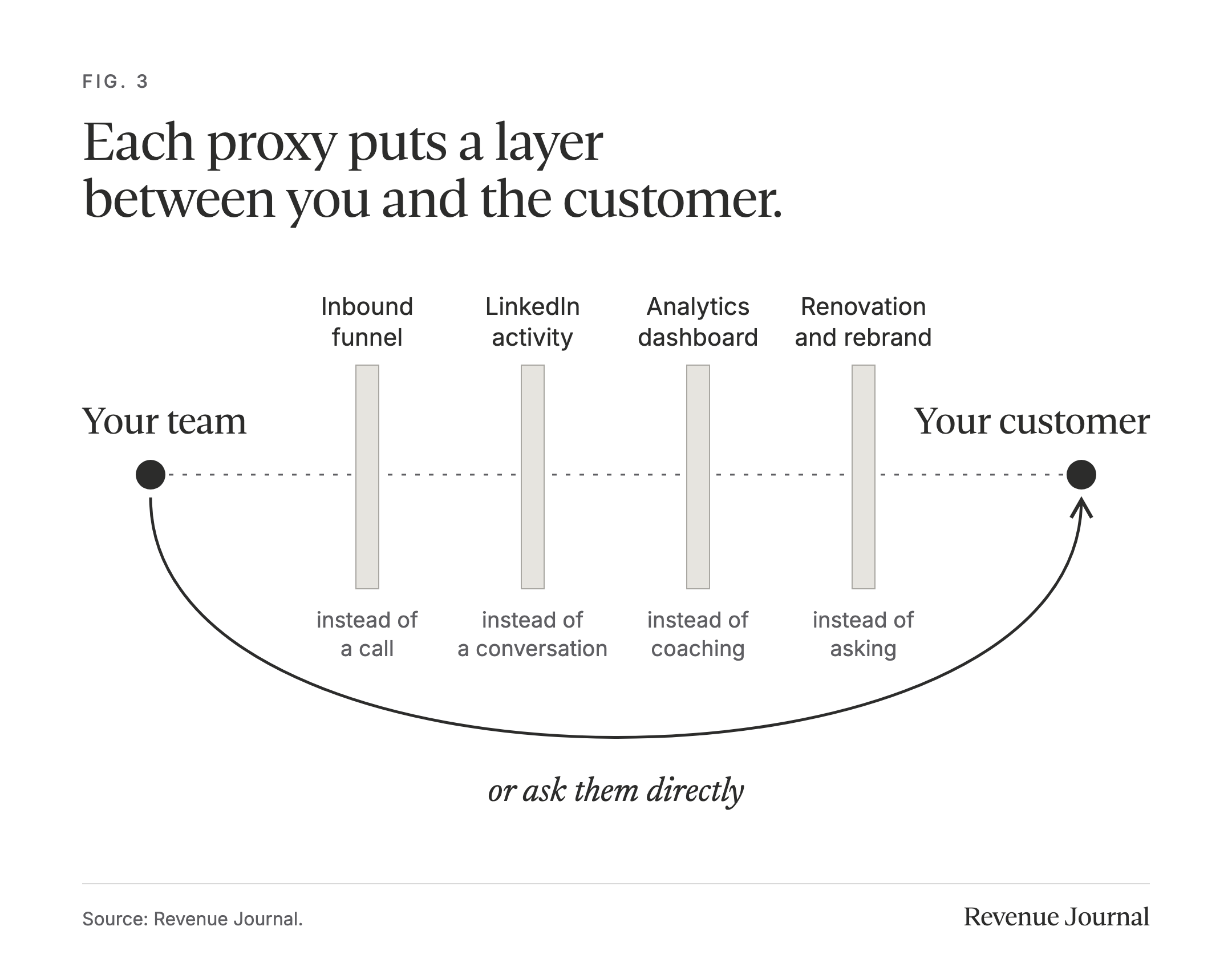
B2B revenue teams do the same thing all the time. We build funnels, cadences and dashboards that look like rigour. Each one puts a layer between us and the person who actually decides whether we win. The activity feels productive. It generates reports. It fills the day. And it gradually replaces the one input that moves the needle.
None of this means the proxies are worthless. The brewery still needed clean, modern pubs. That was table stakes. But table stakes do not differentiate you, and they do not tell you what your customer is actually deciding on. Only the customer can do that, and only if you ask them directly (and it does help if you offer them a pint in return).
The three ways we hide from customers
Three proxies show up again and again. Each one is a way to look busy while avoiding a direct conversation.
Inbound instead of the phone
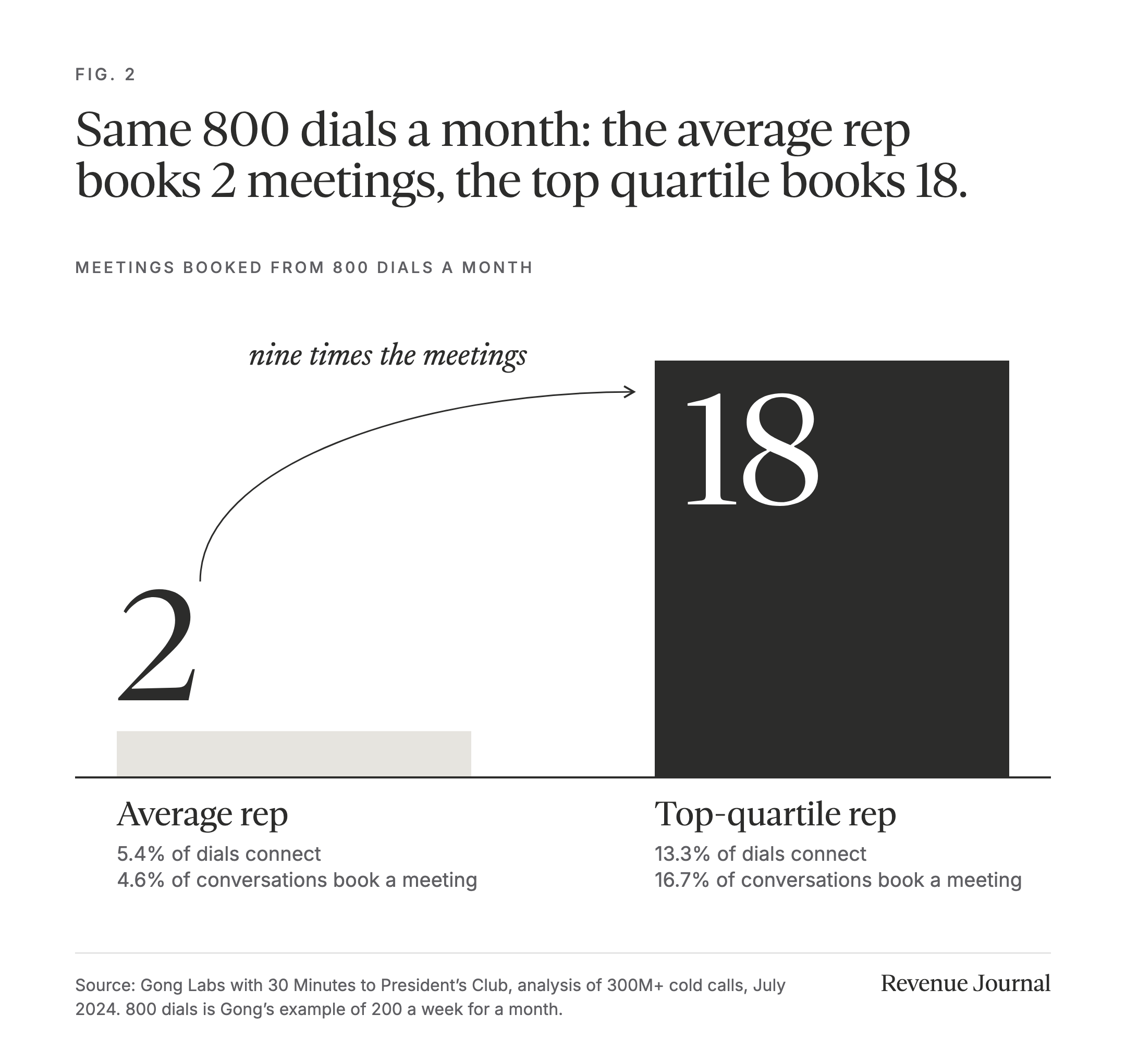
Teams pour budget into content and wait for the form fill, partly because it scales and partly because nobody has to make an awkward call. The problem is yield. On Gong's analysis of more than 300 million calls, the average rep connects on 5.4% of dials and the top quartile on 13.3%. On 800 dials a month, that is 2 booked meetings for the average rep and 18 for the best (Gong, 2024). The channel is not dead. Doing it half-heartedly is. The same data found cold calling nearly doubles your email reply rate even when nobody picks up. The direct act makes the mediated one work.
LinkedIn instead of a conversation
Social selling is the easiest hiding place of all. It feels like prospecting and carries almost no risk of rejection. We learned how little that is worth the expensive way. We once paid a group of LinkedIn creators the best part of £10,000 to spread our message for us. It was close to useless. More often than not we hated what they put out, and we spent more time cleaning up their messaging than the reach was ever worth. We would have reached more real people with a flock of carrier pigeons, and had less mess to clear up afterwards. LinkedIn is where buyers check you out, not where they buy. Treat it as the shop window, not the shop. There is a tension worth naming. 42% of sales pros say social media gets them the best response to cold outreach (HubSpot, 2025). That is what sellers report, not measured conversion. Use LinkedIn to earn the conversation. Do not let it become the substitute for one.
Dashboards instead of coaching
Managers do the same thing to their own people. 84% of sales leaders told Gartner that analytics has had less influence on performance than leadership expected (Gartner, 2024). More uncertainty creates demand for more data, which creates demand for more dashboards, and the reports pile up while the number does not move. Meanwhile the thing that reliably works gets squeezed out. 58% of sales managers say they cannot finish their tasks in the time they have, and internal process burden can cut a manager's quota attainment by up to 18% (Gartner, 2020). Coaching is the casualty. A manager carrying a £2m team number who loses 18% to internal busywork is risking up to £360,000. We made this exact argument about AI in our piece on why AI widens the B2B sales performance gap. The leader who cannot sit beside a struggling rep and show them how to run the call has already lost, no matter how good the dashboard looks.
What the silence costs you
The cost does not show up as a line item. It shows up as churn and stalled expansion, quietly, over quarters.
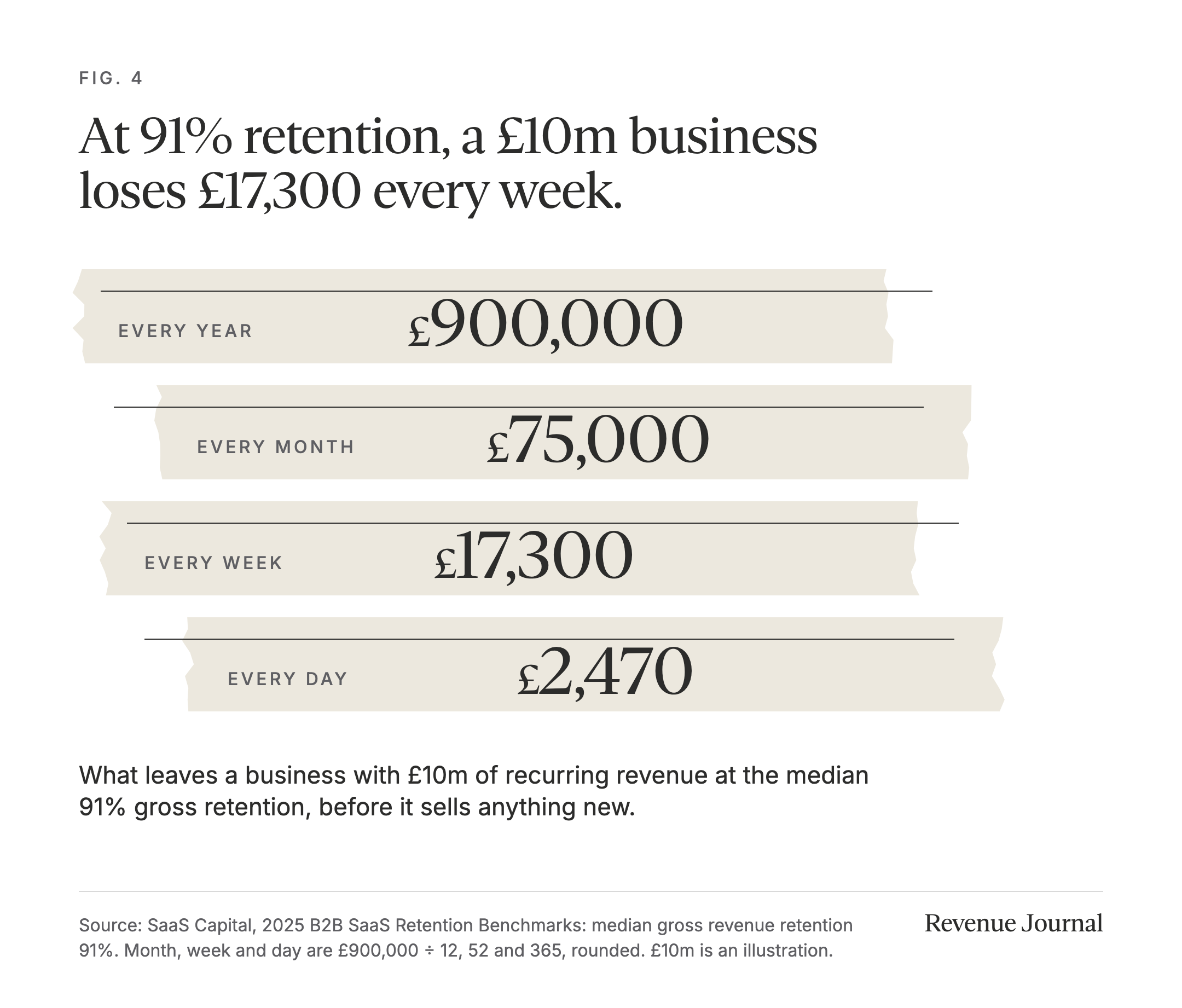
The median private B2B software company keeps 91% of its revenue year to year (SaaS Capital, 2025). On £10m of recurring revenue, that 9% gap is £900,000 walking out of the door every year before the team sells anything new. SaaS Capital also found growth is exponentially tied to retention. Companies above 130% net retention grow more than three times faster than those below 90%. Retention is not a customer success problem. It is the growth engine.
Most of that churn is not dramatic. Bain's work on why customers leave finds it is rarely one big event. It is a series of small ones. Slow responses, an unwanted bundle, a basic that quietly stopped working. The hot chips went cold and nobody asked, so nobody knew.
This is the same point Chris Voss made in our conversation on B2B negotiation tactics. The deal is lost long before the close, when the information that would have changed everything stays hidden. You surface it by creating the conditions for people to tell you the truth. Not by sending them another email.
Stop renovating. Start asking.
None of the fixes here need a budget or a transformation programme. They need you to do the uncomfortable, direct thing.
- Call ten customers this month. Not a survey, not an NPS blast. Ten actual conversations with the people who pay you. Ask them what nearly made them leave, and what keeps them. Write down the words they use.
- Find your hot chips and cold beer. In those calls, look for the one or two boring operational things that frequent, happy customers keep mentioning. Audit whether you are actually delivering them, then fix the ones you are not before you touch anything else.
- Rebalance one manager's week. Pull a manager out of one recurring report and put those hours into live coaching, sitting beside reps on real calls. Measure attainment, not dashboard adoption.
- Treat inbound and LinkedIn as the shop window. Keep them. Judge them on whether they earn a direct conversation, not on activity volume. The conversation is where the deal is won or lost.
If you run a small sales team, this is where your advantage lives. We covered how small sales teams can outrun bigger competitors by moving fast. Acting on what a customer told you this week, while a larger rival is still booking the meeting about the meeting, is that advantage in miniature.
The buyers are not the problem. Brent Adamson's research shows most B2B buyers are not avoiding you, they are struggling to make a confident decision and looking for help. You cannot help them from behind a dashboard. You help them in a conversation.
Predicting what customers want is a fool's errand. Tastes change from one year to the next, and the consultancy deck will always sound more sophisticated than the free pint and the honest question. The teams that win are not the ones with the cleverest funnel. They are the ones still talking to their customers, and acting on what they hear.
Frequently Asked Questions
Does inbound marketing still work in B2B sales?
Inbound still generates awareness, but most inbound leads never convert, and the few that do still need a real conversation to close. Inbound works best as a way to earn that conversation, not replace it. The teams that pair it with direct outreach consistently outperform those who wait for the form fill.
Is cold calling dead in B2B?
Not for sellers who do it well. Gong's analysis of over 300 million calls found the top quartile of reps book nine times more meetings per dial than the average, and that calling nearly doubles email reply rates even when no one picks up (Gong, 2024). The channel rewards skill and consistency, and punishes half-hearted effort.
Why don't sales dashboards improve performance?
Because data is not coaching. 84% of sales leaders told Gartner that analytics has had less influence on performance than leadership expected (Gartner, 2024). More dashboards create more reporting work, which crowds out the direct coaching and customer conversations that actually move the number. The fix is to protect that direct time, not add another report.
What is the cheapest way to improve B2B retention?
Talk to customers directly and act on what they say. Bain found 80% of companies believe they deliver a superior experience while only 8% of customers agree. Closing that gap is close to free, and with the median B2B software company losing 9% of revenue a year (SaaS Capital, 2025), every point of retention recovered is worth real money.
About Revenue Journal
Revenue Journal is where B2B executives share first-hand growth strategies and hard-won insights. Published by Aira. https://www.aira.app/revenue-journal