When we started Upsales, we had a simple, slightly insane ambition: build a Nordic CRM and compete with Salesforce and Microsoft.
People thought we were crazy. Maybe we were. But we backed it with relentless execution, and for years, it worked. We grew fast, landed strong partnerships, and kept outperforming expectations.
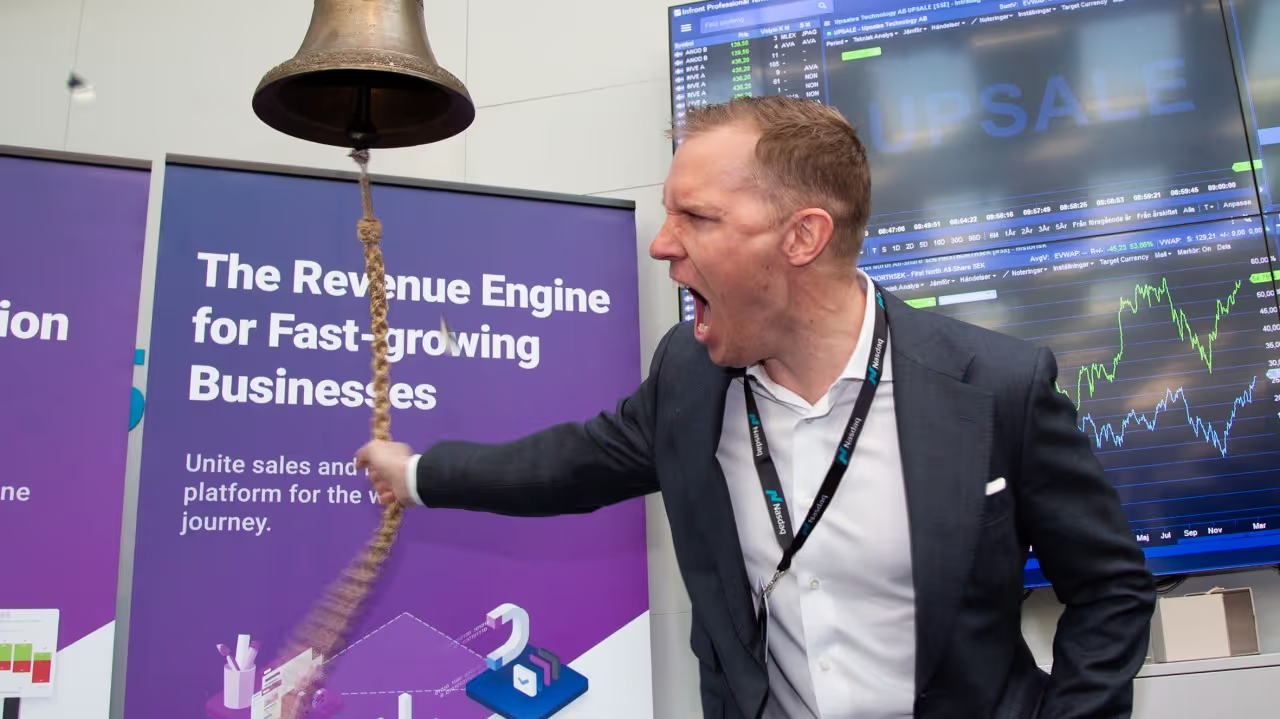
That success taught me a dangerous lesson: execution is everything. If you just work hard enough, the rest takes care of itself. I watched competitors come and go and assumed we were winning because we were simply better at getting things done.
So I stopped thinking seriously about positioning. Why bother? The market was big, we were growing, and our edge was operational.
Then the market changed
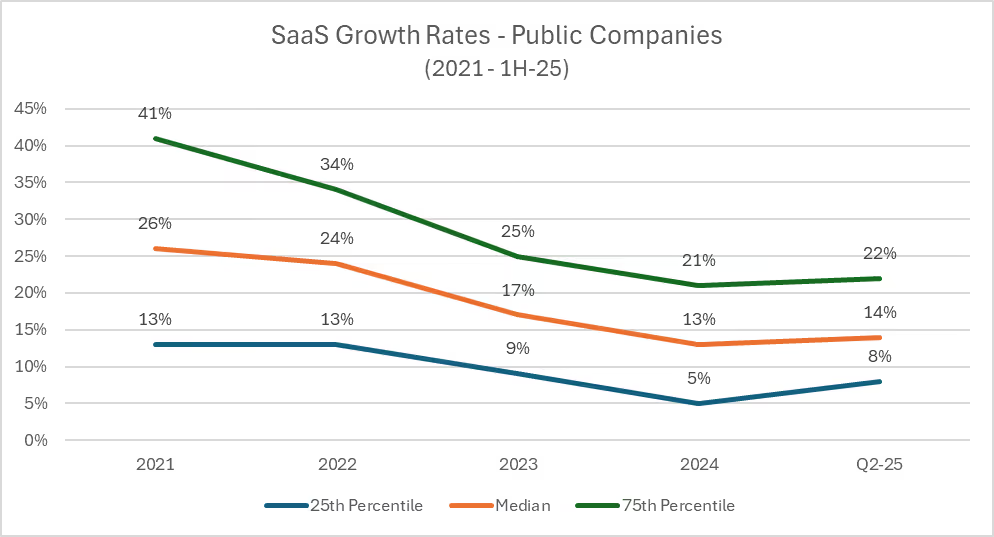
2023 was a hard year for most SaaS companies. Growth slowed across the board, and we were no exception. As I looked at what we'd built, I realized something uncomfortable: we'd created a business entirely dependent on near-perfect execution. No margin for error. No structural advantage. If a key person left, if a product release slipped, if a competitor out-hustled us for a quarter, we'd feel it immediately.
We were selling CRM to everyone. Every industry, every company size, every vertical. Which sounds like scale, but it's actually fragility. When you're everything to everyone, you're competing on execution alone, forever.
The question that changed our approach
We stopped asking "how do we execute better?" and started asking something harder: how do we compete in a way that doesn't require perfection?
We looked at our customer base and asked: where are we not just a good option, but the obvious one? Where do we have fit so strong that a competitor would struggle to displace us even if their team outworked ours for a quarter?
The answer came from an unexpected place. A new customer in a specific niche came to us through inbound. We built a deep integration with their platform, signed a formal partner agreement, and suddenly something clicked. In that segment, we weren't just a CRM vendor. We were the only CRM that actually worked for their ecosystem.
The bet we made
We made a decision: all of our outbound sales energy would focus on that one segment. Not forever, not exclusively. Inbound from other verticals was still welcome. But every proactive sales motion pointed at these companies.
The total addressable market? About six thousand companies. By most startup standards, that sounds small. It isn't. These are high-value accounts, and we've barely scratched the surface.
What happened next was counterintuitive. Our sales execution today is still really good, but honestly it was slightly sharper a few years ago. And yet we're currently bringing in twice the number of new customers compared to those earlier years.

What positioning actually does
When you know exactly who you're selling to, everything simplifies. Your messaging is specific. Your product roadmap is clearer. Your sales team walks into conversations with credibility instead of pitching from scratch. And your marketing has a target instead of a broadcast.
More importantly: you stop needing to be perfect. You're not winning deals on hustle alone. You're winning because you belong in the room in a way your competitors don't.
The takeaway
If you're running a business that would collapse the moment execution slips, a bad quarter, a difficult hire, a competitor with a bigger budget, that's a positioning problem, not a performance problem. And it's not sustainable, you can't run your business using your health as venture capital.
The question I'd encourage every founder and CEO to sit with: what could we offer to which customers that no one else is offering them? You don't need a massive market to build something defensible. You need the courage to focus.
Don't build a business that requires 100% execution to survive. Build one where great positioning means good execution is enough.
That lesson stayed with me. When we started building Aira.app, an AI sales agent, we made positioning the first decision, not an afterthought. Before writing a line of code, we asked: who is this for, and why would we be the only obvious choice for them? After years of learning it the hard way at Upsales, I wasn't going to make the same mistake twice.