In brief:
Enterprise AI investments are failing at scale — 95% of pilots have delivered zero measurable P&L impact — while small B2B sales teams that actually commit are seeing real returns. The reason is structural: the compliance layers and governance processes that make large organisations powerful are the same things slowing their AI adoption. Small teams have an agility window right now. It won't last.

Every major sales organisation is investing heavily in AI. The results have been almost universally disappointing. Meanwhile, small teams who actually commit are seeing real returns. The gap between those two realities is the biggest opportunity in B2B sales right now.
The numbers are brutal
A 2025 MIT study (Project NANDA, “The GenAI Divide”) analysed 300 enterprise AI deployments and found that 95% of pilots delivered zero measurable impact on the P&L. Companies have poured $30–40 billion into generative AI globally, and almost all of it is stuck in pilot purgatory. The same study found that large enterprises take an average of 9 months to scale an AI pilot. Mid-market firms do it in 90 days. Same technology. Wildly different outcomes.
So what’s going wrong? It’s not effort. 81% of sales teams are already experimenting with or deploying AI tools (Salesforce/Sopro, 2025). The intent is there. The machinery to execute on it isn’t.
Scale is the problem, not the solution
74% of companies struggle to scale AI value because of data governance and accessibility issues (BCG, 2025). Only 1 in 5 enterprises has mature governance for autonomous AI agents (Deloitte, 2025). The infrastructure that made these companies powerful; layers of compliance, cross-functional sign-off, security review, is now the thing slowing them down.
This isn’t a permanent state. Enterprise will catch up. But right now, the very things that make big organisations dominant are working against them.
The efficiency problem hiding in plain sight
So, if we accept that small sales teams in 2026 have an agility advantage over their enterprise counterparts, where then should we look to capitalise on this advantage?
At present, sales reps spend only 30% of their time actually selling (Salesforce State of Sales, 2024). The rest disappears into admin, prospecting, research, and internal meetings. That’s 70% of every working week spent on tasks that AI can either eliminate or dramatically reduce.
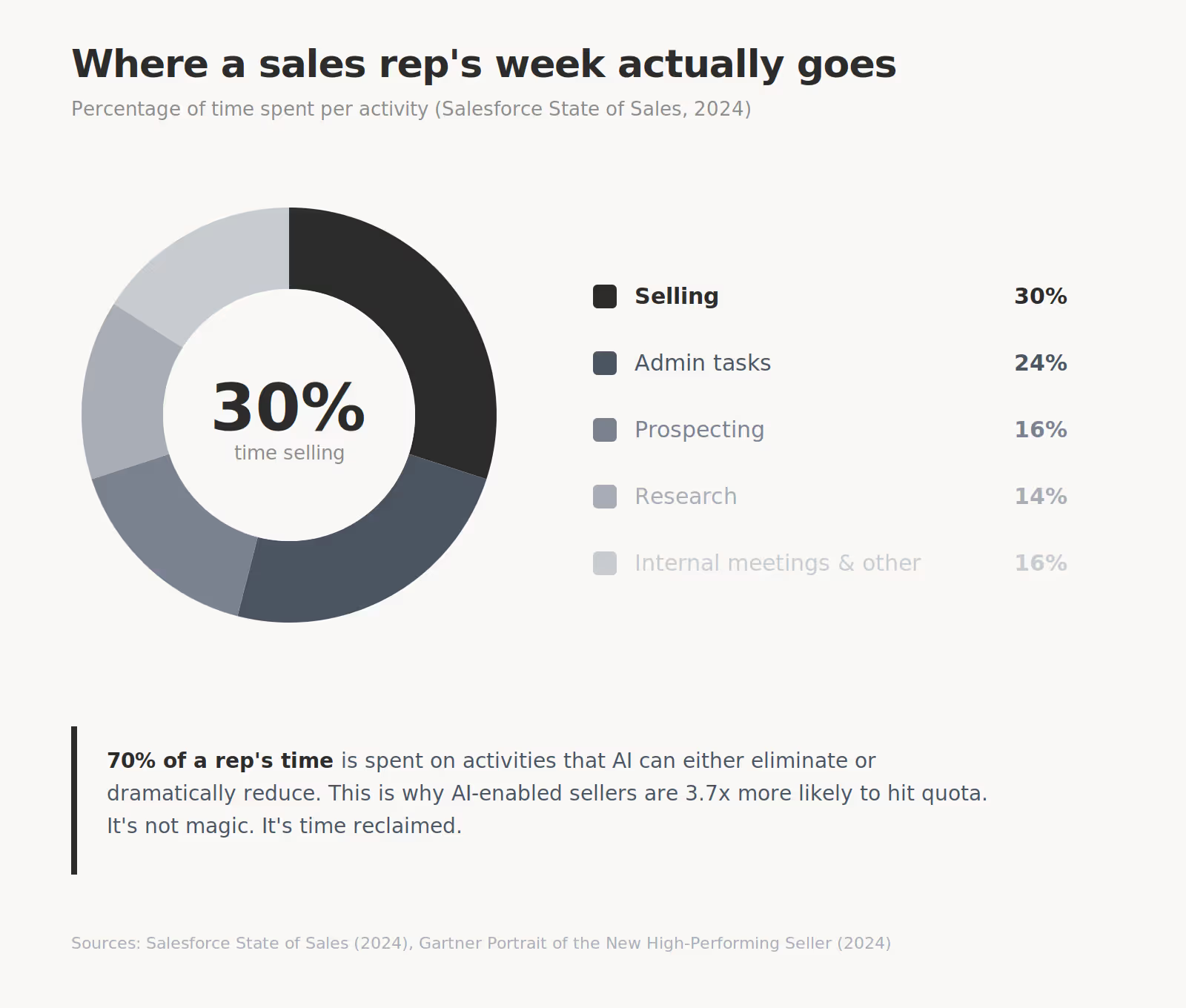
If AI can automate even half of that non-selling time, you effectively double your team’s selling capacity without hiring a single person. For a 10-person team, that’s the equivalent of adding 5 more reps. For free.
Small teams are already proving this
Gartner found that sellers who effectively partner with AI are 3.7x more likely to hit quota (Gartner, 2024). Among SMBs already using AI, 91% report revenue lift and 86% report improved profit margins (PayPal/Business Wire, 2024). These aren’t projections. They’re results from teams who stopped watching and started implementing.
And the use cases aren’t out of reach. They’re practical. Small teams are using AI agents to review meeting notes, emails, and other communications to flag accounts at risk and identify stalled opportunities that need specific action to move forward. They’re using AI to review contact history and create meeting prep documents, so reps walk into every conversation with context they didn’t have to spend an hour compiling. They’re using AI to generate branded pitch decks and supporting documents in minutes instead of hours.
None of this requires a six-figure budget or a PhD in Machine Learning. It requires a willingness to start.
This window has an expiry date
Here’s the uncomfortable part. Everything that makes small teams fast right now is temporary. The advantage isn’t that we’re better. It’s that we’re quicker. And quick only matters while the other side is still slow.
Once enterprise sales orgs crack AI implementation, and they will, their existing advantages come roaring back. More headcount, more budget, more data. If AI turbocharges the impact of every individual rep, a 200-person sales team with AI becomes a force multiplier that no 10-person team can match. As AI-native GTM skills become more common in the talent market, big orgs will hire the best people too. The window isn’t closing because you’re doing something wrong. It’s closing because they’re catching up.
Decide which game you’re playing
If you’re running a small sales team, you have a choice to make. And time is running out to make it.
If you haven’t started, stop treating AI as something to watch from the sidelines. The most common excuse is “it doesn’t apply to our business” or “our clients want human relationships.” Both can be true and both are beside the point. AI doesn’t replace the relationship. It gives you more time for it. So where do we start?
Start this week
Record and transcribe every meeting. Don’t just store them. Use an AI to interpret what happened, extract follow-up actions, flag risks, and identify opportunities. If you’re not doing this already, it’s the single fastest win available to you.
Sync all customer emails through an AI layer. Get a real-time pulse on what your customers are actually thinking, not what your reps remember to report in the Monday standup.
Start this month
Build a knowledge base from your existing data. Use AI to dig through past customer interactions, emails, and support tickets. Have it build an FAQ and knowledge base with near-complete coverage. This becomes the foundation for everything else.
Document your best people’s expertise. Interview your top performers with AI and have it capture everything as structured, reusable knowledge. Then use that to automate proposals, presentations, and customer service responses. Your best rep’s instincts shouldn’t live only in their head.
Start this quarter
Turn that knowledge into onboarding. Use the documented expertise and knowledge base to build onboarding plans that get new hires productive without 100 hours of hand-holding from your best people. This is how small teams scale without losing quality.
Analyse your customer base and find more like your best. Use AI to identify patterns in your most successful accounts, then use that data to find new companies that match the same profile. Better targeting, less wasted outreach, higher conversion.
None of these require a transformation budget or a 12-month roadmap. They require a decision. The small teams that are winning right now didn’t wait for permission or certainty. They pick up the tools and start working.
The advantage for small teams is real. But opportunities don’t wait for you to feel ready.