For the past twelve months, I've been able to spend a significant part of my time building Aira.app , Upsales' newest venture and our AI-powered sales assistant.
That's only possible because of the people I have around me. People I trust completely to hold things together and push things forward while my attention is divided. This is a story about one of them.
I've known Fredrik since we were fourteen years old. We grew up together, and somewhere along the way, he ended up joining my company. That was in 2014. He's still here today, leading our sales team, breaking records year after year. But the path between then and now was anything but straight.
Before joining Upsales, Fredrik had built an impressive career at one of Sweden's largest media companies. He started in sales, got promoted into management, and eventually led a large team. He won the award for best sales rep, out of three hundred people, two years in a row. By any measure, he was a success. And then he decided to leave it all behind and bet on tech.
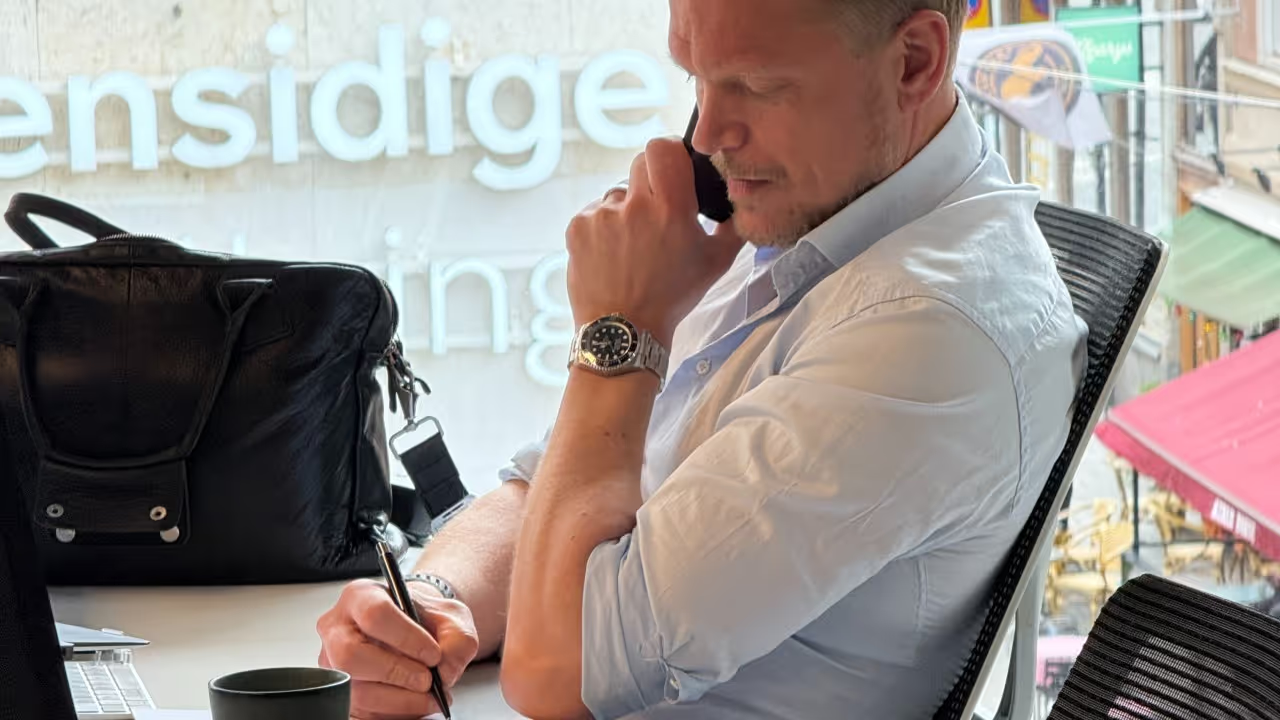
He joined as a sales rep. And he put his money where his mouth was, literally.
He took a significant part of his savings and bought one percent of the company. In 2014, that was a leap of faith. In hindsight, it turned out to be a very good investment. But at the time, it was a bet on himself, on me, and on something that hadn't yet proven itself.
The plan was simple: learn the ropes, get the product under his skin, then step into a management role. What we didn't fully anticipate was how different enterprise software sales is from selling ad space. The complexity, the longer cycles, the different kind of trust you have to build, it's a different game entirely.
Fredrik worked harder than almost anyone I've seen. But around month three or four, he asked me to step into a room with him. And he told me, quietly, that he didn't think he was going to make it. That this was harder than he'd imagined. That he wasn't sure he could do it.
I remember sitting there thinking about my own early days selling Upsales. Even as the founder, even knowing the product inside out, I had struggled too. And I knew Fredrik. I knew his work ethic, his intelligence, his character. So I told him: just keep going. You will get there. I know you will.
He didn't believe me. But he trusted me. And a few months later, the results started coming.
That moment has always stayed with me, not because I gave great advice, but because of what it revealed. The difference between him quitting and him succeeding wasn't skill. It wasn't strategy. It was someone who knew him well enough to hold the belief for him when he couldn't hold it himself. That's what a close friendship sometimes allows that a normal manager-employee relationship doesn't.
Fredrik grew into his management role over the years. He had solid results. He was respected. And then, unexpectedly, he left. He and his wife started a confectionery business together. They ran it for about a year before deciding to sell it and move on.
When he came back, something was different. Running a small business changes you.
The accountability is total, there's no one else to absorb the consequences. He returned sharper, more grounded, with a different relationship to ownership.
But there was still one thing missing. As a manager, he was ninety-nine percent of the way there. Good with people, thoughtful, technically sharp. But that last percent, the willingness to truly hold people accountable, to have the uncomfortable conversations without softening the edges, wasn't quite there. And teams feel that one percent. They always do.
Then one evening, his teenage son came home from football practice and said something that apparently landed differently than anything I or anyone else had ever said. His son was frustrated that some of his teammates didn't seem to want to be there. Why should I have to train alongside people who don't care? He wanted to be there. He shouldn't have to carry people who don't.
Fredrik came to work the next day as a different person.
He sat his team down. I don't know exactly what he said. But the week after that conversation, booked sales meetings went up forty percent. And they stayed there. The team has been breaking records ever since.
I've thought a lot about why that moment was the one that finally unlocked something. My best guess is this: it wasn't new information. Fredrik already knew, intellectually, that accountability was the missing piece. But hearing his own son articulate it, the unfairness of carrying people who don't want to be carried, the quiet resentment it builds in those who do care, made it visceral in a way no management coaching ever had.
Sometimes growth requires a mirror you didn't expect.
A teenage boy after football practice. A friend who tells you to keep going when you're ready to quit. A year running a small business selling candy with your wife.
Fredrik's story isn't a story about a talented person succeeding. It's a story about how growth happens in layers, across years, and often through channels that have nothing to do with the workplace. It's nonlinear. It's unpredictable. And it rarely looks the way you thought it would from the outside.
He's been with me for over a decade now. Still leading. Still growing. And I suspect we're not done yet.