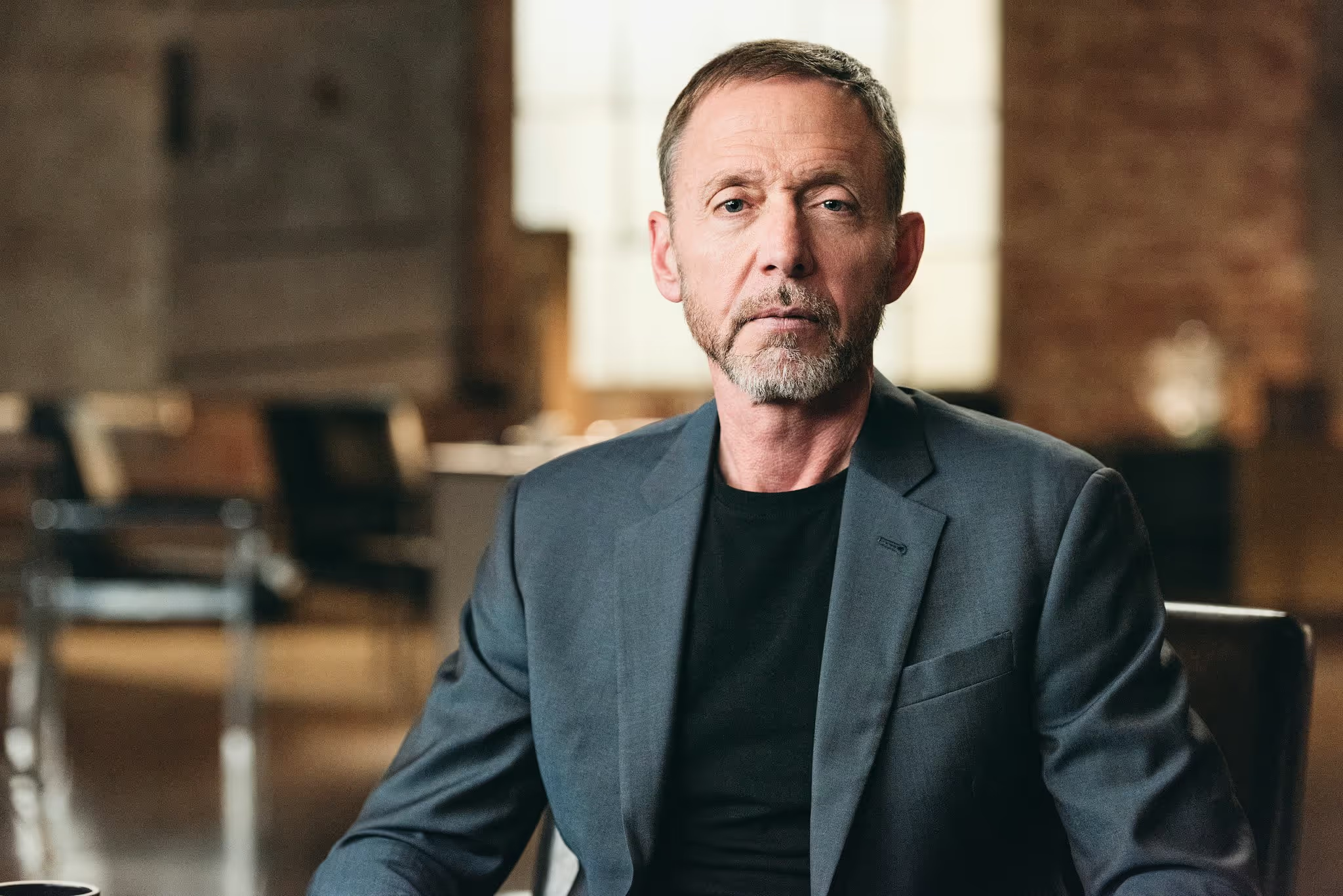
In September 2024, we kicked off an AI project inside Upsales, the B2B sales platform I founded over twenty years ago and grew into one of the most successful SaaS companies in the Nordics.
We built a master database from scratch, financial data, news data, website data, dozens of sources. It became part of the Upsales product. It worked. And we moved on.
Then one night, Fredrik, our sales manager and one of my closest friends, sent me a link. It was late. I was about to go to sleep.
It was a video of Steve Jobs, just returned to Apple after being fired years earlier, speaking to his staff before launching "Think Different." He talked about what Apple stands for. About how customers don't come to you for specs. They come to understand who you are and what you believe. But what hit me hardest was something else he said. About how even the greatest companies can lose their way. How growth brings noise. How the original clarity gets diluted by people and processes and priorities that weren't there at the beginning. How one day you look up and realise the thing you built has drifted from the thing you meant to build.
I couldn't sleep.
Upsales is one of the most successful SaaS companies in the Nordics. Growing. Profitable. Genuinely loved by customers. But here's the honest truth about building a company for twenty years: as you grow, you compromise. Not all at once. Slowly. A decision gets made by someone who doesn't fully understand the original vision. A sales meeting runs differently than you'd run it. A product direction drifts slightly. None of it is dramatic. All of it adds up. When we were five people, everyone knew exactly what we were building and why. That clarity is hard to hold onto at seventy-five.
I kept thinking: after twenty years, I could name five or ten things Upsales does that are genuinely world-class. Truly unique. But somehow they'd gotten buried under customizations, feature requests, the natural noise of growth. And I kept asking myself: what if we took the absolute best of everything we've learned and built something with zero constraints? No legacy. No compromises. Just the purest version of what great sales technology could be.
I sat down and started writing. It was supposed to be a quick spec, something I'd hand to a consultant the next morning to build an HTML prototype. An internal project. Something to sharpen the direction for the product team.
I wrote until 4am.
And somewhere in those hours, something shifted. I kept reading back what I'd written and thinking: this is too good to keep internal. This is too good to limit to a few thousand companies in the Nordics. We have a thousand customers in Sweden, customers across ten countries, but what I was looking at on that screen wasn't built for them specifically. It was built for every founder, every sales leader, everywhere. The thought that kept coming back was: everyone is going to want this.
That was the moment it stopped being a prototype.
And then I caught myself thinking the most dangerous thought in startups: if you build it, they will come.
I've been running a business for twenty years. No product is that good. The graveyard of great products is enormous. Go-to-market is still where most things die.
So I started thinking about distribution. More than ten years ago, we had a go-to-market idea at Upsales that we never fully executed because it wasn't the right fit for that business. International, scalable, community-driven. The kind of model that doesn't need a big sales team to work. I dusted it off. This time, the fit was perfect.
But then something else clicked.
If you visit a hundred SaaS company websites today, almost all of them communicate as if their customers are also SaaS companies. Tech stack. Growth stack. Scalable infrastructure. Playful, kindergarten-bright Silicon Valley branding. But 98% of the world economy isn't SaaS. It's real businesses. And the people running those businesses are not thinking about tech stacks. They're thinking about their bucket list. The next trip. What success actually feels like.
So we made a decision that felt almost paradoxical for a tech product: we'd build a lifestyle brand.
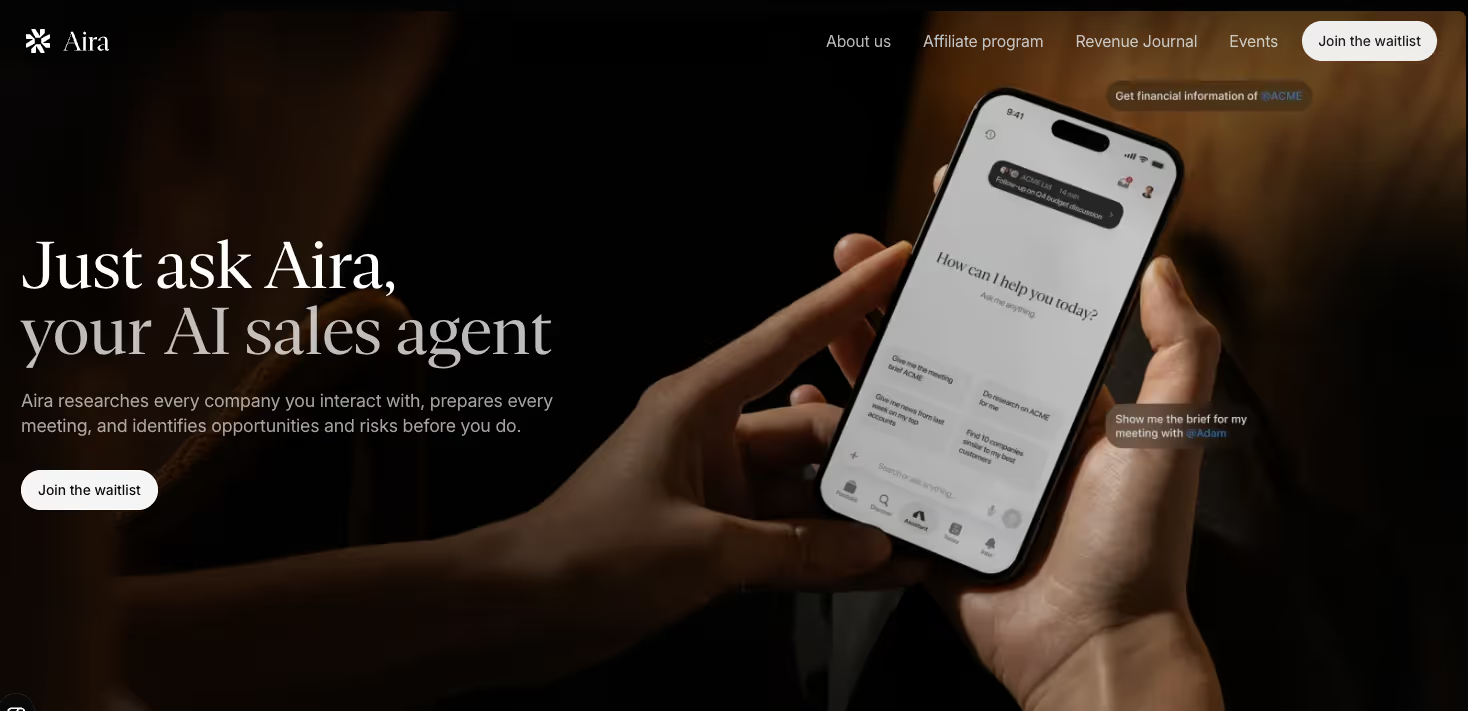
Best product. Best content. We have twenty years of experience creating material that resonates with founders and CEOs, and we know it works better than talking about technology. And we'd wrap it all in an aesthetic that feels less like a SaaS tool and more like something you'd find at a dinner in Lake Como. Not Palo Alto. Not Product Hunt. Something that feels like it belongs in the life you're actually trying to build.
We started building. The first version was a desktop app. A few months in, our CTO Fredrik came to me and said: this is great, but we're still building the wrong thing. We're building sales funnels, to-do lists, company lists. It's still a CRM. We should strip all of that away and build a true assistant. Something that works for you, not the other way around. So we pivoted. Mobile first. All the intelligence, none of the manual data entry. An assistant that does the work.
As the product took shape in late 2025, we started thinking about launch. And we had one more unconventional idea: a world tour.
18 cities. Stockholm, London, Amsterdam, Dubai, New York and more. High-end evening sessions, champagne, the right people in the room. We called it Revenue Growth & Champagne.

I'll be honest about the numbers because they're hard to believe. Hundreds of sign-ups per event. Follower growth that compounds city by city. Cost per lead that would make any CFO do a double-take. On paper it doesn't look scalable. We're putting a hundred people in a room at a time, not running Facebook ads to millions. But the quality of attention is different. People show up. They bring colleagues. They post. They tell other people. When you treat people like they deserve something beautiful, they remember it.
We're approaching the commercial launch now.
April 15th.
The product is called Aira.app.
If you're a founder, a sales leader, or someone who's ever felt like the tools built for you were actually built for someone else, this is for you.
More soon.